Keyword/Tag: research

Produce Prescriptions A cure for fruit and vegetable underconsumption?

Initial research findings suggest produce boxes offer unique benefits. Together, Brighter Bites, a national nonprofit, and UT (University of Texas) physicians have partnered to deliver a produce prescription program and pilot study of 150 families with Medicaid-eligible children ages 5-12 in the Houston, TX, area for eight months. Part of this program includes families receiving deliveries of produce boxes full of about 20 pounds of fresh fruits and veggies, or 8 to 10 types of fruits and vegetables, delivered every two weeks for 32 weeks directly to their home via DoorDash.

“Early indications are that families who received Produce Rx were able to significantly increase their fruit and vegetable consumption. Families have seen a wide array of produce items, such as kohlrabi, eggplant, and dragon fruit, in addition to many items they were already familiar with,” says Mike Pomeroy, MPH, vice president of operations, Brighter Bites.

“One parent commented, ‘My son and I are always excited to see what will come in the bag next week. We work together in the kitchen to find ways to use all the unique produce items.’ These families have learned to love new produce varietals that they will purchase with their own dollars in the years to come, increasing produce sales for everyone,” says Pomeroy.

Click here to read the full article.


The Data Harvest, Vol. 3: Volunteers on View

In this edition of The Data Harvest, we highlight one of the key pillars of our program: our incredible volunteer force.

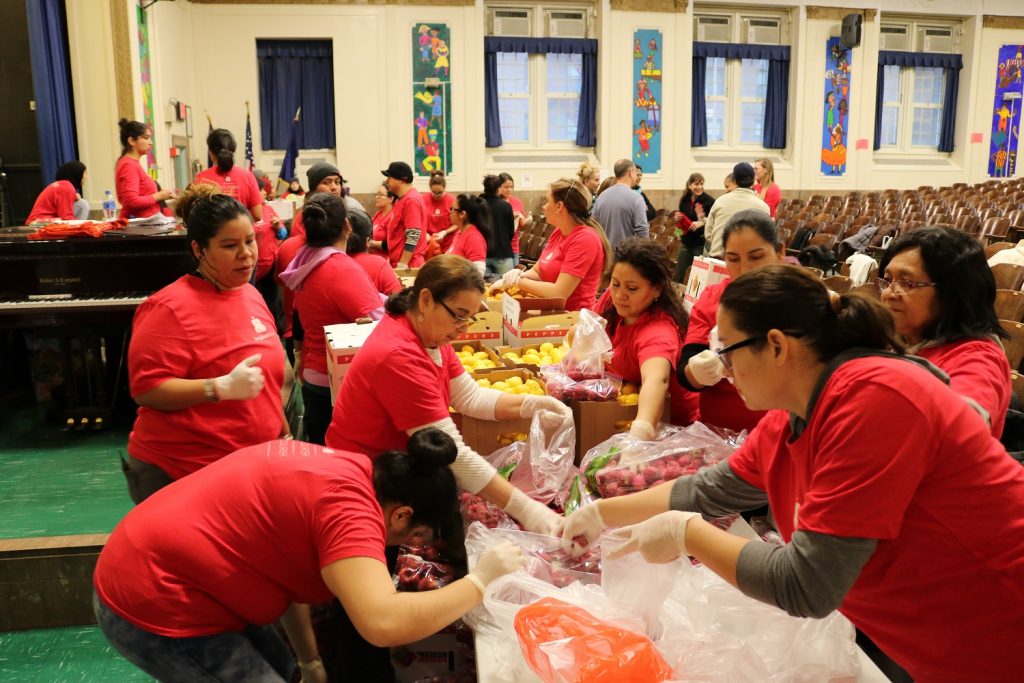
At Brighter Bites, our volunteers come from both the families we serve and the wider community surrounding our schools. Brighter Bites often encourages parents (and little siblings!) to get involved at their students’ schools for the first time, with 71% of teachers in our program agreeing that Brighter Bites increased parent engagement at their school. We regularly surpass the goal of ten parent volunteers for every 150 bags packed, and for the 2018-2019 school year, we had over 3,350 unique parent volunteers for a total of over 36,000 volunteer hours at our 92 sites across the country!

Brighter Bites also invites local companies and organizations to support building communities of health through fresh produce. Last school year, over 250 community members volunteered for a total of over 500 hours at Brighter Bites sites nationwide.

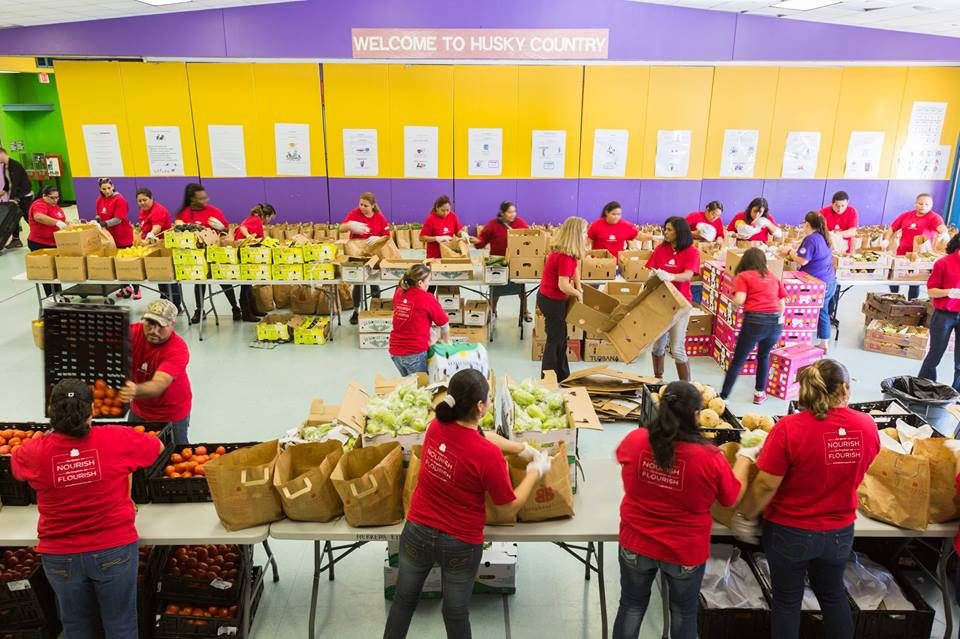
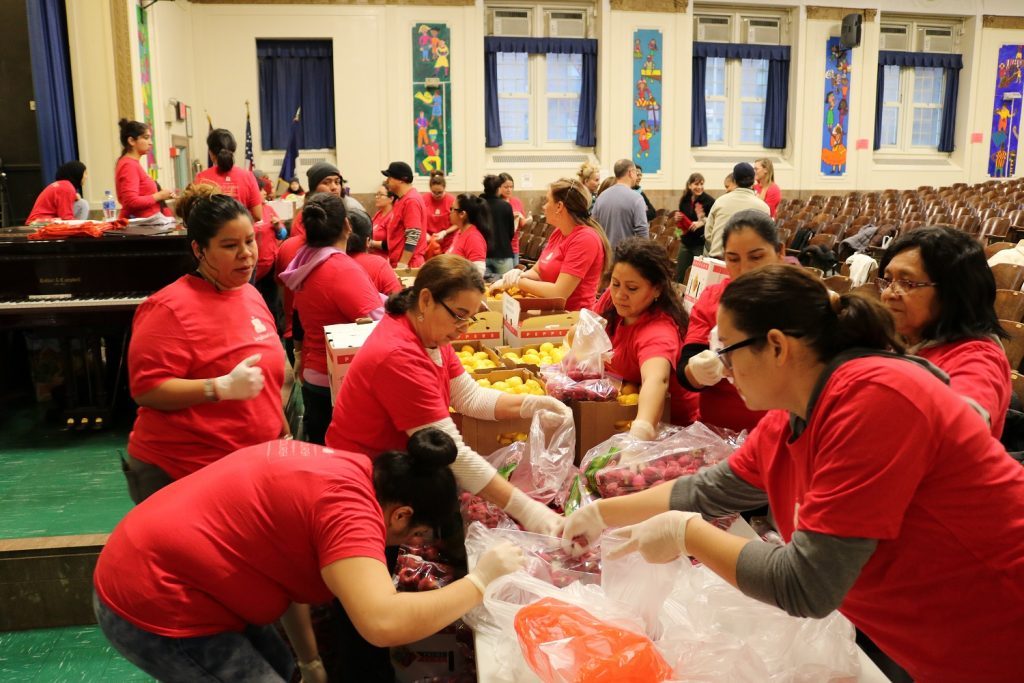
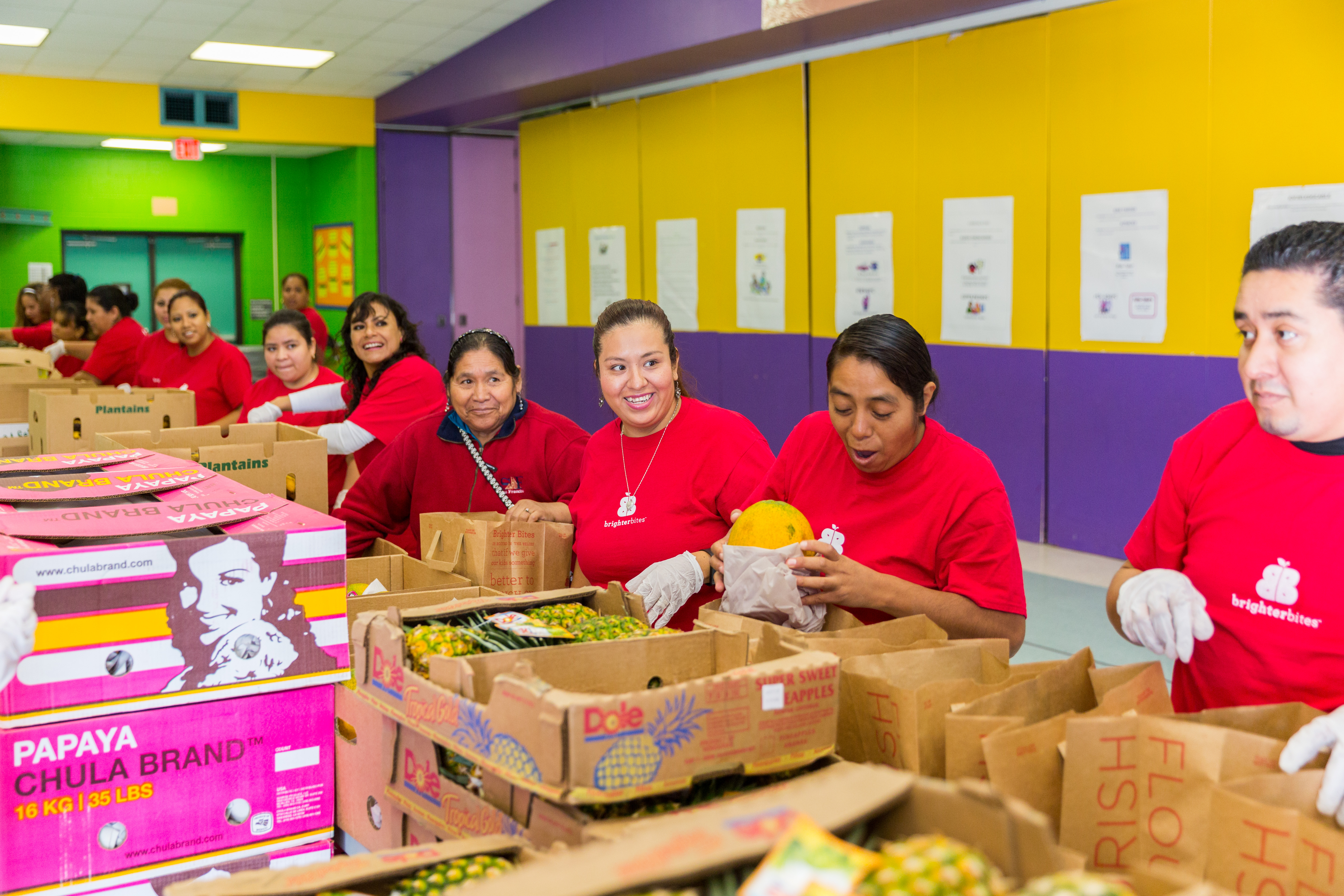
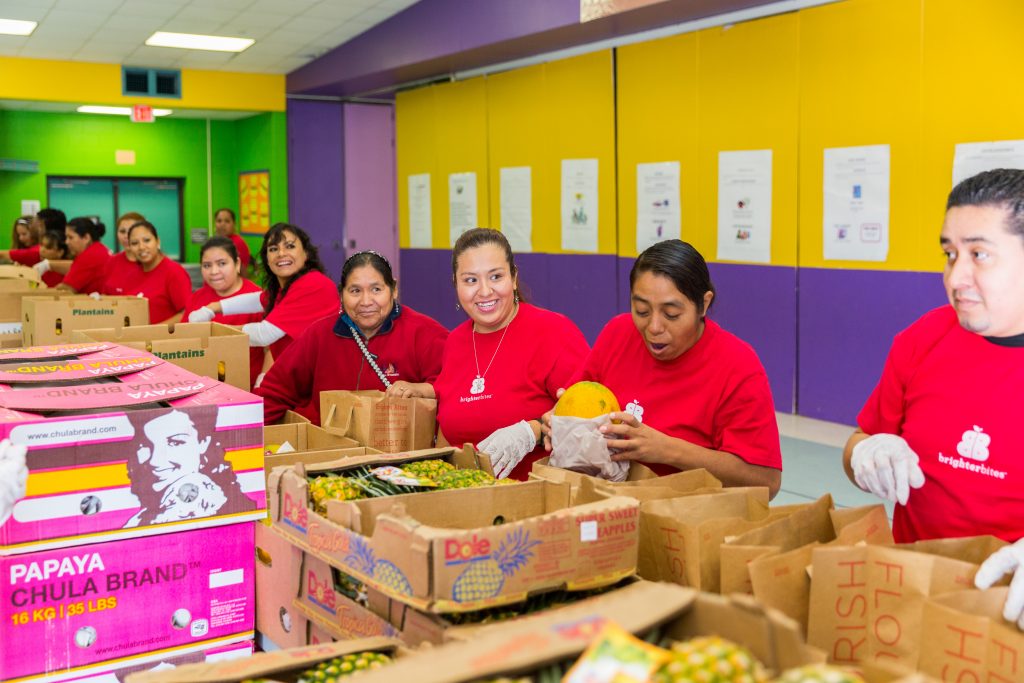
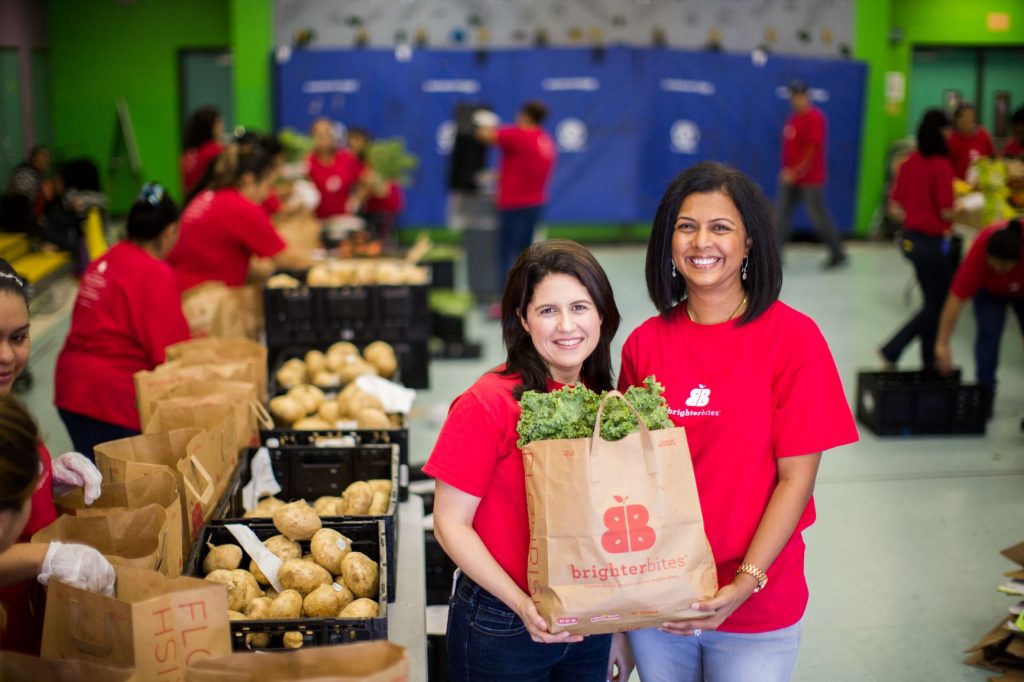
Unified in our bright red t-shirts, Brighter Bites staff, parents, and community volunteers work together in assembly lines to divide produce into hundreds of bags. We couldn’t be more humbled by the dedication and joy they bring each week.

To find a Brighter Bites program and volunteer-opportunity near you, check out our volunteer page.

The Data Harvest, Vol. 2

In this installment of The Data Harvest, we use data collected by Dr. Shreela Sharma and her research team to examine how Brighter Bites’ use of the Coordinated Approach to Child Health (CATCH) program paired with delivering produce to teachers’ classrooms is impacting not only the families we serve but also our students’ schools.

This school year, over 30,000 families in over 100 schools nationwide will participate in the Brighter Bites program, where they will also engage with the CATCH platform, a coordinated school and community approach to child health backed by 25 years of scientific evidence-based research. CATCH synthesizes the different factors working together in a child’s life, including school health education, community involvement, family engagement, physical environment, health services, and more, to improve the child’s overall health. Brighter Bites implements the CATCH program at each school in our Austin, Dallas, Houston, D.C., and New York locations to ensure students are properly educated on nutrition education and physical activity. In Southwest Florida, Brighter Bites partners with a similar coordinated school health program called YUM.

Our teachers reported a 70% success rate of CATCH implementation at their schools, and after the 2018-2019 school year, had led over 13,000 CATCH lessons and 36,000 produce activities. Rounded out with the 800 CATCH activities taught by P.E. coaches and 120 YUM activities in Florida, Brighter Bites students participated in a total of over 50,000 CATCH and YUM lessons nationwide!

We’re excited to report that not only is our program impacting the health of children and their families but also the health of our teachers, who receive two Brighter Bites bags full of eight to 12 different fresh produce items for their classroom each week. After using the produce for an in-class produce activity with their students, teachers subsequently get to take home their produce bags, and 86% of teachers reported that our program influenced their own intake of fruits and vegetables.

We think the data gathered by Dr. Shreela Sharma’s research platform speaks for itself! Keep an eye out for our next installment of The Data Harvest, which you can have delivered right to your inbox in our newsletter, The Brighter Byte.


The Data Harvest with Dr. Shreela Sharma, Vol. I

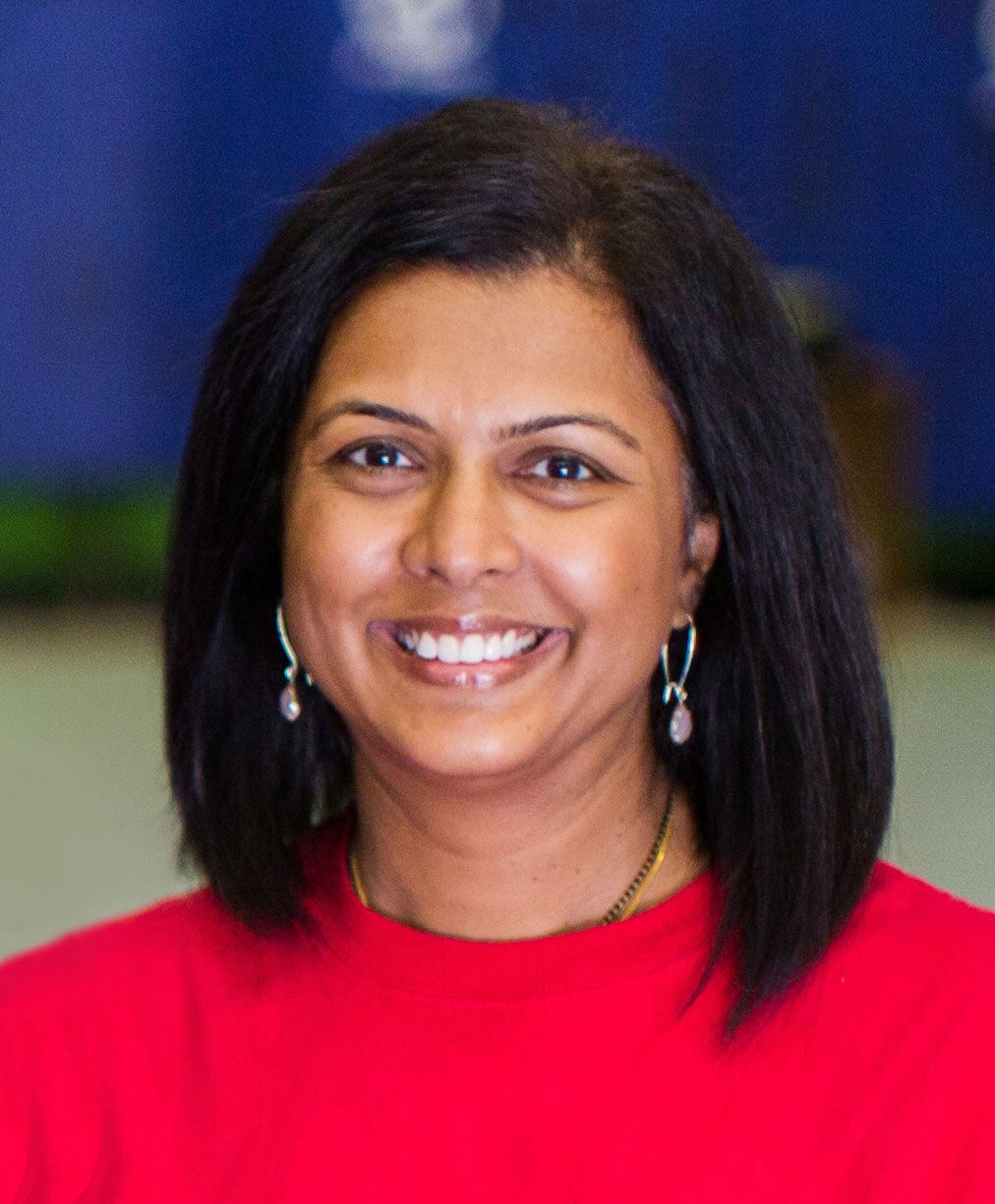
One of the key ingredients to Brighter Bites’ ability to create a positive impact on our families’ health outcomes is our core identity as a theory-driven, evidence-based health promotion program. Since co-founding Brighter Bites in 2012, Dr. Shreela Sharma, Professor of Epidemiology at the UTHealth School of Public Health, has overseen the research platform that has allowed Brighter Bites to “critically assess program efficacy, while pushing the scientific dialogue forward to understand how to healthfully feed our families.”

We’ve collected some pretty impressive data over the past few years and look forward to keeping you up to date with more facts and figures that represent the impact we’re making on families around the country.

These are a few highlights of the data we’ve published in the past:

  • 98% of Brighter Bites parents report their children eating more fruits and vegetables while participating in the Brighter Bites program.
  • Of those, 74% said they maintained that increased level of consumption after Brighter Bites ended.
  • Two years after participating in the program, an average Brighter Bites family consumes 19 additional servings of fresh fruits and vegetables over one week.
  • Children who participate in Brighter Bites consume more fruits and vegetables served at school lunches than children who are not enrolled in Brighter Bites.
  • 69% of 704 teachers surveyed agree that Brighter Bites has increased parental engagement at their school.

Children and parents participating in Brighter Bites reported a:

  • significant increase in the amount of fruits and vegetables consumed;
  • significant increase in serving more fruits and vegetables as snacks;
  • two-fold increase in cooking meals from scratch, and a significant increase in eating meals together and serving more produce as part of those meals;
  • two-fold increase in using nutrition labels to guide grocery purchases;
  • and a significant decrease in added sugars consumed among children.

Dr. Sharma and her research team recently published an article in the Journal of Nutrition Education and Behavior that looked at the impact of the Brighter Bites program on decreasing fruit and vegetable waste at school lunches among fourth and fifth grade children in Houston and Dallas. Compared with the children in the comparison group, those children receiving Brighter Bites showed a significant decrease in the amount of fruits and vegetables wasted at each meal. Here’s an article the team published in the journal Behavioral Sciences that looks at the design of that study, too.

To find out more about our ongoing research projects and read our published articles, check out the Research page of our website!


More Brighter Bites Research Published!

americanschoolhealth-logo

Food co-op models have gained popularity as a mechanism for offering affordable, quality produce. The Journal of School Health, the academic journal of the American School Health Association, has published a scientific paper that uses a qualitative approach to study and demonstrate the impact of Brighter Bites. The paper describes the challenges, successes, and lessons learned from implementation of a school-based program using a food co-op model combined with nutrition education to improve access to and intake of fresh fruits and vegetables among low-income children and their families.

The authors of the paper include Brighter Bites Co-Founder Shreela Sharma, PhD, RD and Brighter Bites Senior Program Director Mike Pomeroy, among others.

Read the paper here!


Sharma Family Establishes Game-changing Endowment in Community Nutrition and Health

sharmas-vibhu-shreela

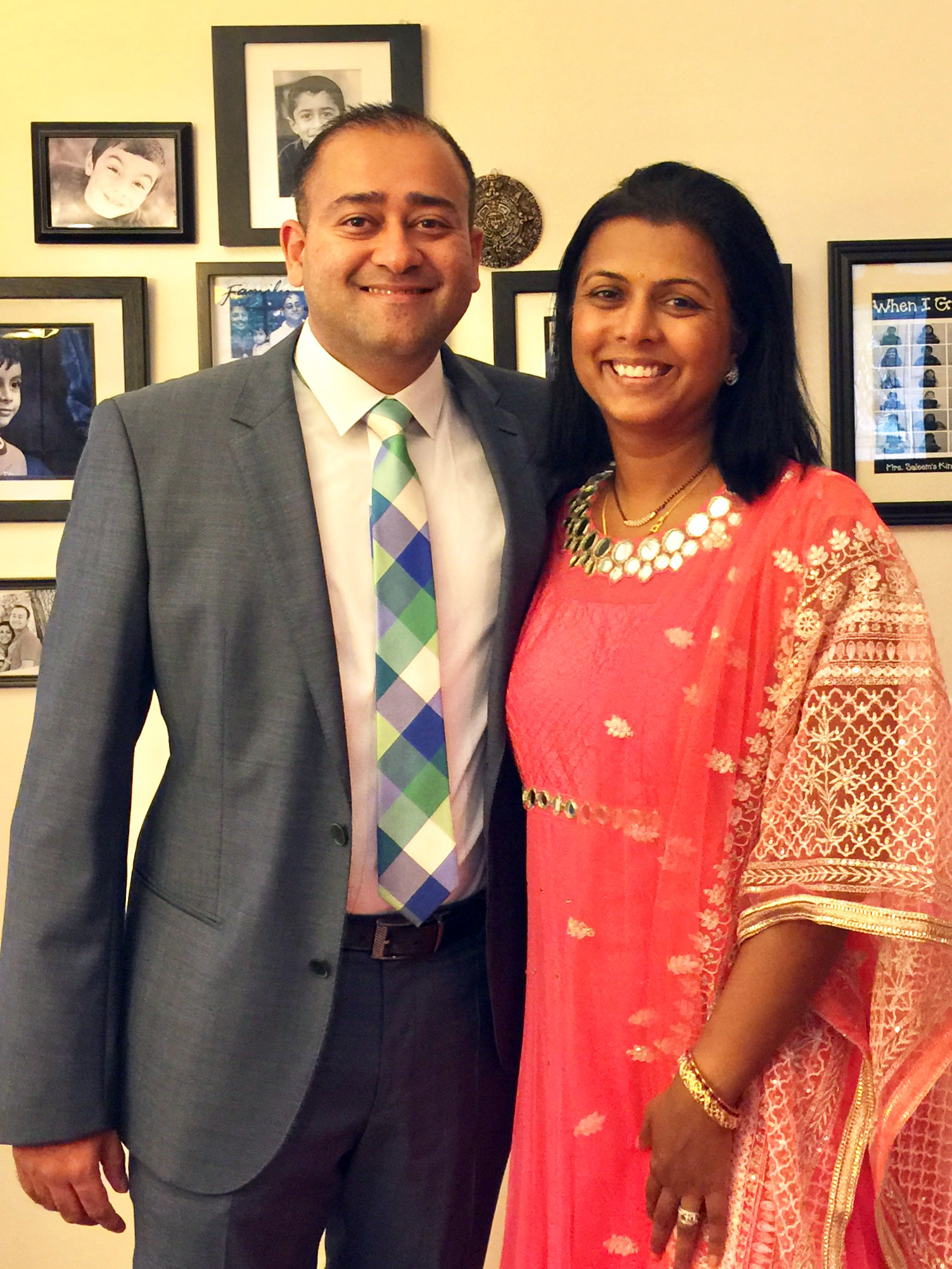
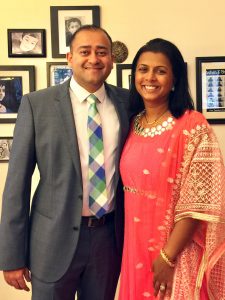
Brighter Bites is thrilled to announce that our co-founder Shreela Sharma and her husband have set up an endowment that will strengthen the link between the Michael & Susan Dell Center for Healthy Living and Brighter Bites, and, most importantly, establish a pipeline of brain power that will develop the next generation of Brighter Bites scientists!

This story from the UTHealth website describes the endowment and the new Sharma Fellows who will benefit it. We have also pasted the story below:

Paying it forward is something that many people aspire to every day. Faculty member and alumna, Shreela Sharma, Ph.D., R.D., L.D., along with her husband, Vibhu Sharma, have committed $100,000 to establish the Shreela and Vibhu Sharma Endowed Fund for Excellence in Community Nutrition, Health & Wellness at The University of Texas Health Science Center at Houston (UTHealth) School of Public Health. The donation will be matched one-to-one by the Game Changers Fund offered by UTHealth.

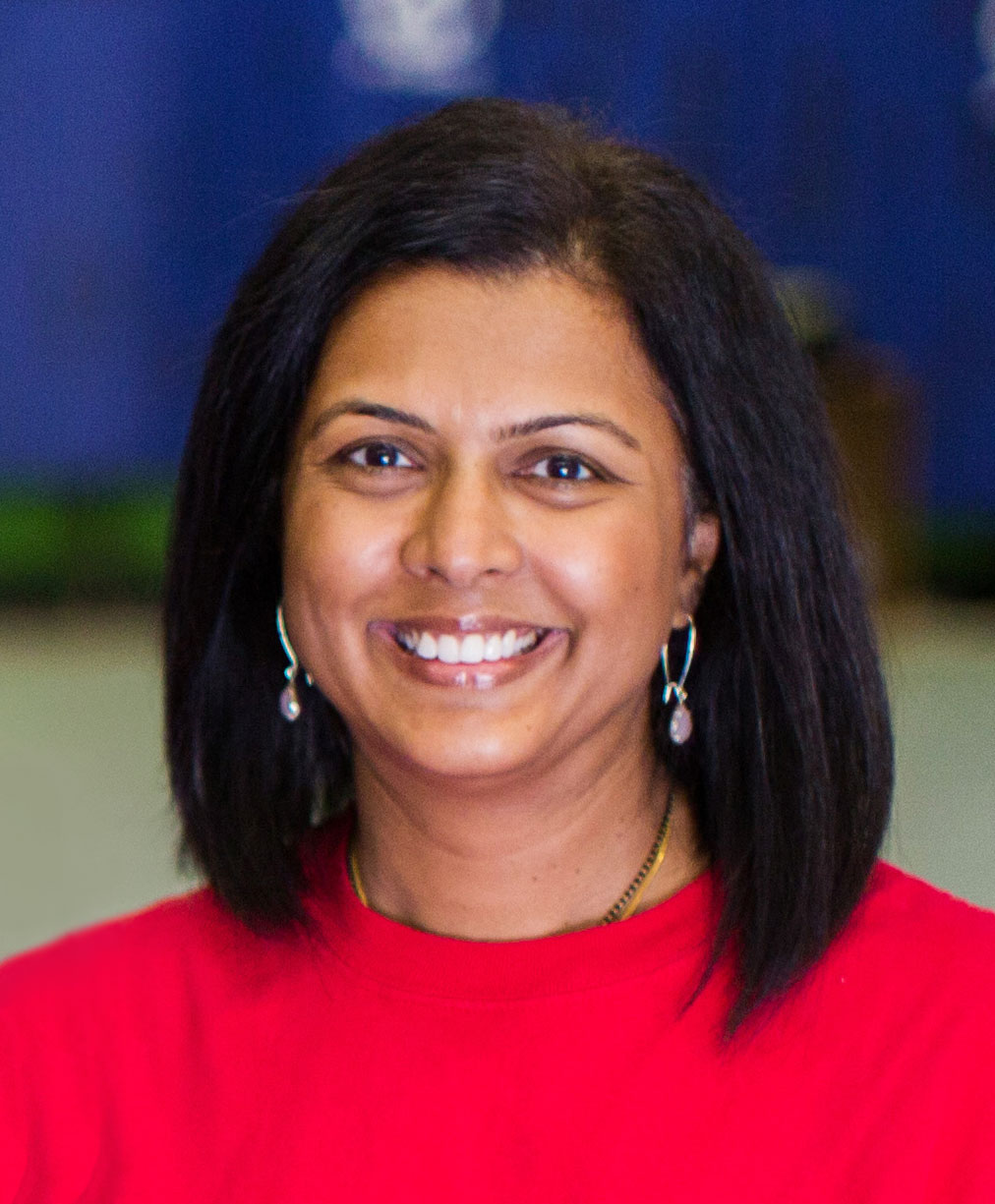
Shreela Sharma is an associate professor in the UTHealth School of Public Health Department of Epidemiology, Human Genetics and Environmental Sciences and works with the school’s Michael & Susan Dell Center for Healthy Living.

“We are grateful to have the support of the Sharmas through this new fellowship,” says Eric Boerwinkle, Ph.D., dean of the School of Public Health. “This support of student academics and research demonstrates the outstanding dedication our faculty members have to the school. Dr. Sharma is already a super star on our faculty, and I look forward to great things from her in the future. Shreela and Vibhu’s gift is a testament to the generosity of the people of Houston to UTHealth and the School of Public Health, in particular.”

The endowment will fund several doctoral-level student fellowships every year. The doctoral fellowships funded by the endowment will be competitive and require a research commitment of at least two semesters (200 hours per semester) from doctoral students selected to be “Sharma Fellows.”

“I went to UTHealth and I had some fantastic experiences and mentors that really made public health important and relevant for me – the whole experience,” says Shreela Sharma about her time as a student at UTHealth School of Public Health where she earned a Ph.D. in 2005. “We always knew that we wanted to give back in any small way possible.”

Sharma, who is known for her work in community nutrition and childhood obesity prevention, says she hopes the fellowship will help the school continue to attract talent at a high level. “We have some fantastic work and research that we’re doing through Brighter Bites, for example. These opportunities would really help students get that ‘public-health-in-action’ experience.”

Shreela Sharma is co-founder of Brighter Bites, alongside Lisa Helfman. This non-profit organization aims to improve eating behavior among predominantly low-income families by introducing them to a routine distribution of fresh produce, along with corresponding education in school and at home, ultimately helping to curb the childhood obesity epidemic in Houston. “Sharma Fellows will be a tremendous asset to the research questions that Brighter Bites is interested in answering” says Lisa Helfman. Sharma’s work at the School of Public Health focuses on Brighter Bites and other community-based nutrition research.

Vibhu Sharma emphasized the economic value that the endowment offers fellows in addition to the experience. Sharma Fellows would not only get compensation for being selected as a fellow, but would also get access to in-state tuition rates. He said he is also interested in the legacy it will leave for his own family. “This would be something in-perpetuity, so it would allow us to have a legacy for the Sharma name,” he says.

He is also excited about continuing to raise awareness in nutrition and public health through this Endowment. “The idea is to highlight what the endowment is going to support, which is research in nutrition and health through programs like Brighter Bites. The outreach and awareness that we would generate from this would hopefully get more people on the healthy bandwagon.” He adds in with a bit of humor, “For people like me, for whom it is easy to jump into a box of Cheetos.”

The endowed fund’s principal investigator is Deanna Hoelscher, Ph.D., R.D., director of the Michael & Susan Dell Center for Healthy Living on the School of Public Health’s campus in Austin (one of six campuses across the State of Texas). Hoelscher’s role in the endowment will be to make sure funds are dispersed as soon as they are ready; see that student work is supervised by a faculty member; and promote the fellowship whenever possible.

Hoelscher echoes the Sharmas’ sentiments for attracting top students to the School of Public Health. “Whenever you get funding like this – especially when it’s for a student who is out of state or out of country – that in-state tuition really amplifies the amount of money you get through the fellowship itself.”

This endowment will strengthen the relationship between academia and the non-profit sector. The goal is to improve the nutrition status and health of parents, children and the greater community.

Brighter Bites Makes a Splash at APHA!

pic 2

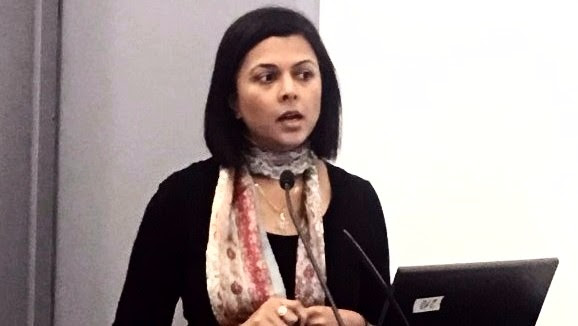
Brighter Bites Co-Founder Dr. Shreela Sharma presented the findings from her recently-published research on the impact of Brighter Bites to a full house in Denver last week at the annual meeting of the American Public Health Association. Dr. Sharma’s presentation stirred up tremendous interest in Brighter Bites. So much so that the Brighter Bites staff in attendance was inundated with interest from people around the country who want to bring the program to their cities!

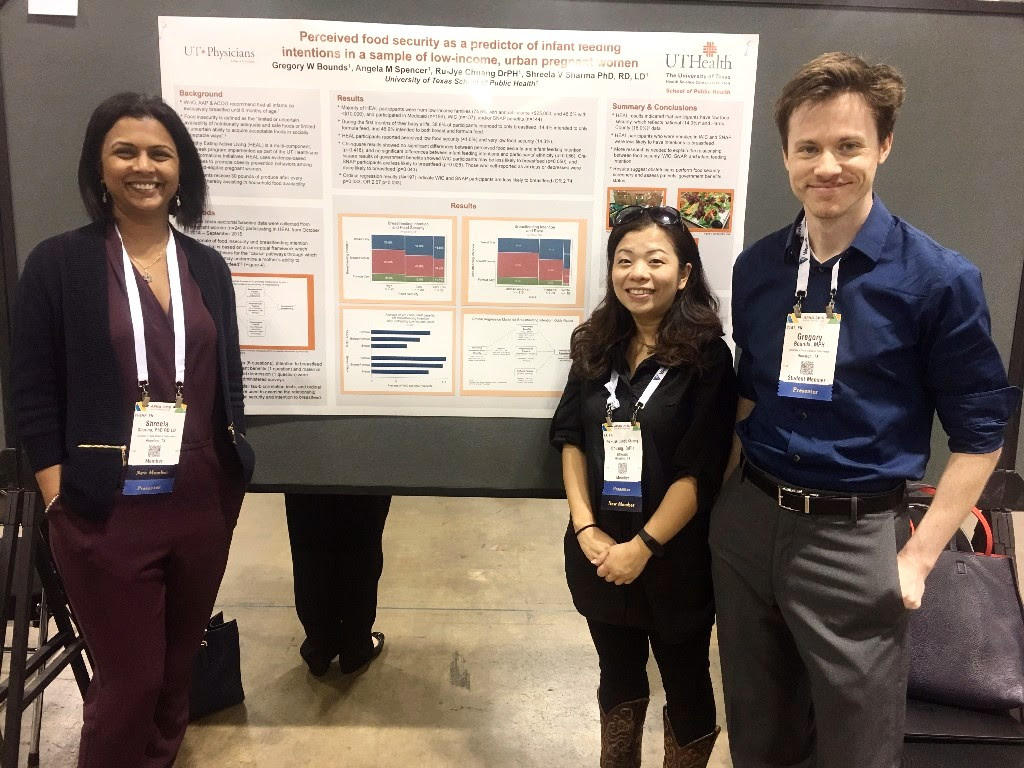
Brighter Bites was featured in a number of other presentations, including a Brighter Bites Photovoice study presented by Dr. Sharma and a poster presentation by Dr. Ru-Jye (Lindi) Chuang, a Post-Doctoral Research Fellow at UTHealth School of Public Health, and Gregory Bounds, Brighter Bites Director of Analytics about the Health Eating Active Living (HEAL) program administered by UTPhysicians.

pic 3

The HEAL program at UT is for women who are pregnant or who have an infant and would like to embrace a healthier lifestyle for themselves and their baby. HEAL includes weekly cooking and exercise classes, breastfeeding support, and fresh produce and nutrition education materials to take home every week through the Brighter Bites program and Legacy of Health.

One special treat worth noting was a round table discussion led by APHA President Dr. Georges Benjamin with participation by four CDC Directors, including current CDC Director Dr. Tom Frieden, and the last three CDC Directors Dr. Julie GerberdingDr. Jeffrey Koplan, and Dr. David Satcher. These public health leaders discussed the most exciting and challenging times during their tenure as well as what they believe are the most pressing public health issues to tackle right now including the epidemic of opiate overdoses, Zika virus prevention, investment in public health, an HIV vaccine, and a global public health strategy.

The Brighter Bites staff who attended APHA was immersed in public health sessions and well as public health partners. They connected with friends from CATCHMichael and Susan Dell Center for Healthy LivingSustainable Food Center, and other partner organizations who were presenting at the event. Overall, a great time was had by all who attended.

Brighter Bites Research Published Again!

KR1

Last week another research article about Brighter Bites was published – this time by the Journal of Health Disparities Research and Practice. The article, Brighter Sights: Using Photovoice for a Process Evaluation of a Food Co-op Style Nutrition Intervention was based upon a study that focused on the Brighter Bites Photovoice initiative, a community research project that explores how communities are reacting to the Brighter Bites program. Photovoice allowed the researchers to see the impact that Brighter Bites has on families at Lantrip Elementary in Houston, a predominately Hispanic, economically-disadvantaged, urban school, through documentary photography.

The parents who participated in this project first developed research questions (1) How are children responding to Brighter Bites? (2) How has Brighter Bites impacted my family’s lifestyle?; then took photos; and, finally reflected on and analyzed the resulting pictures, all as a team.

BR2

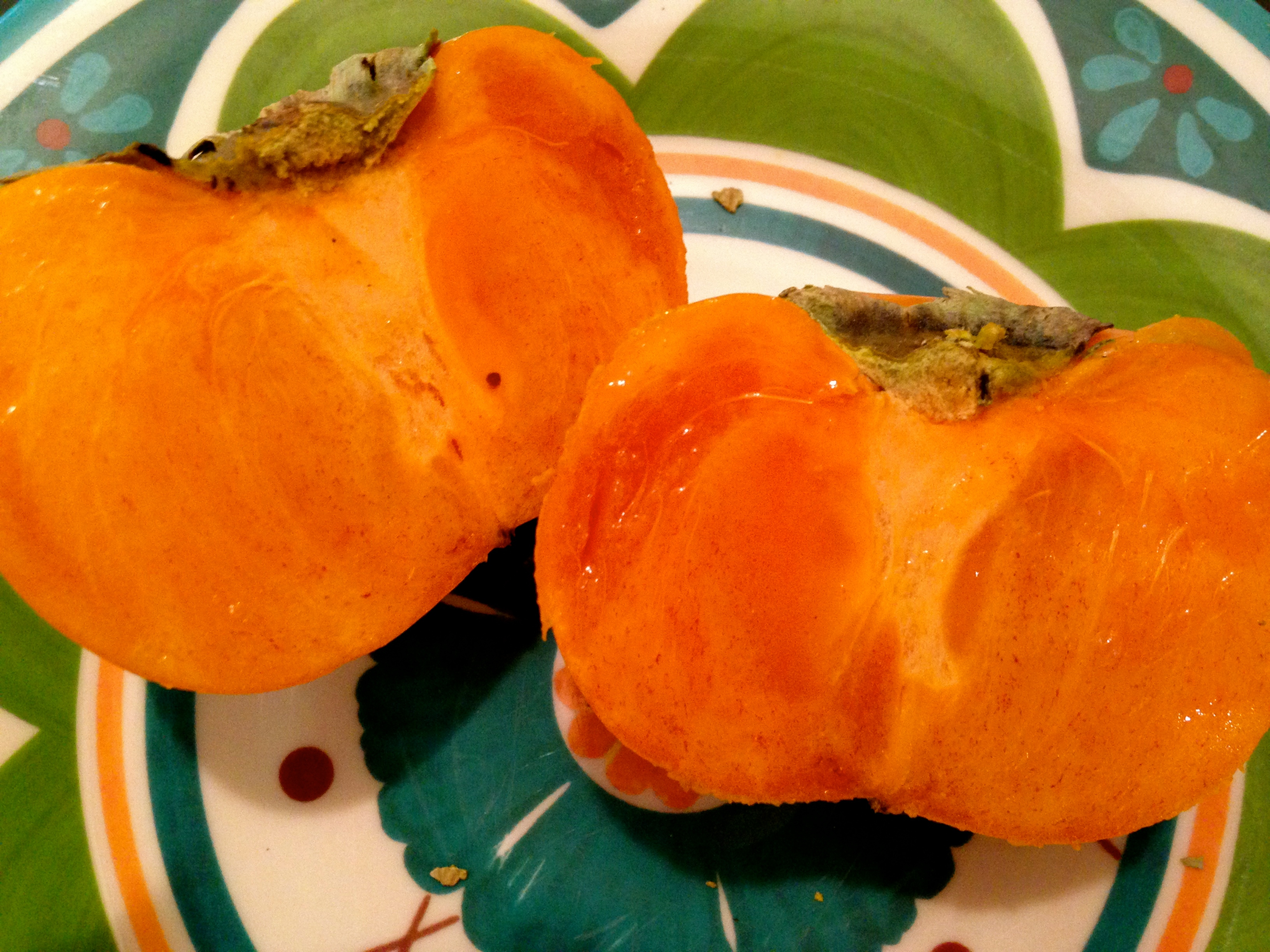
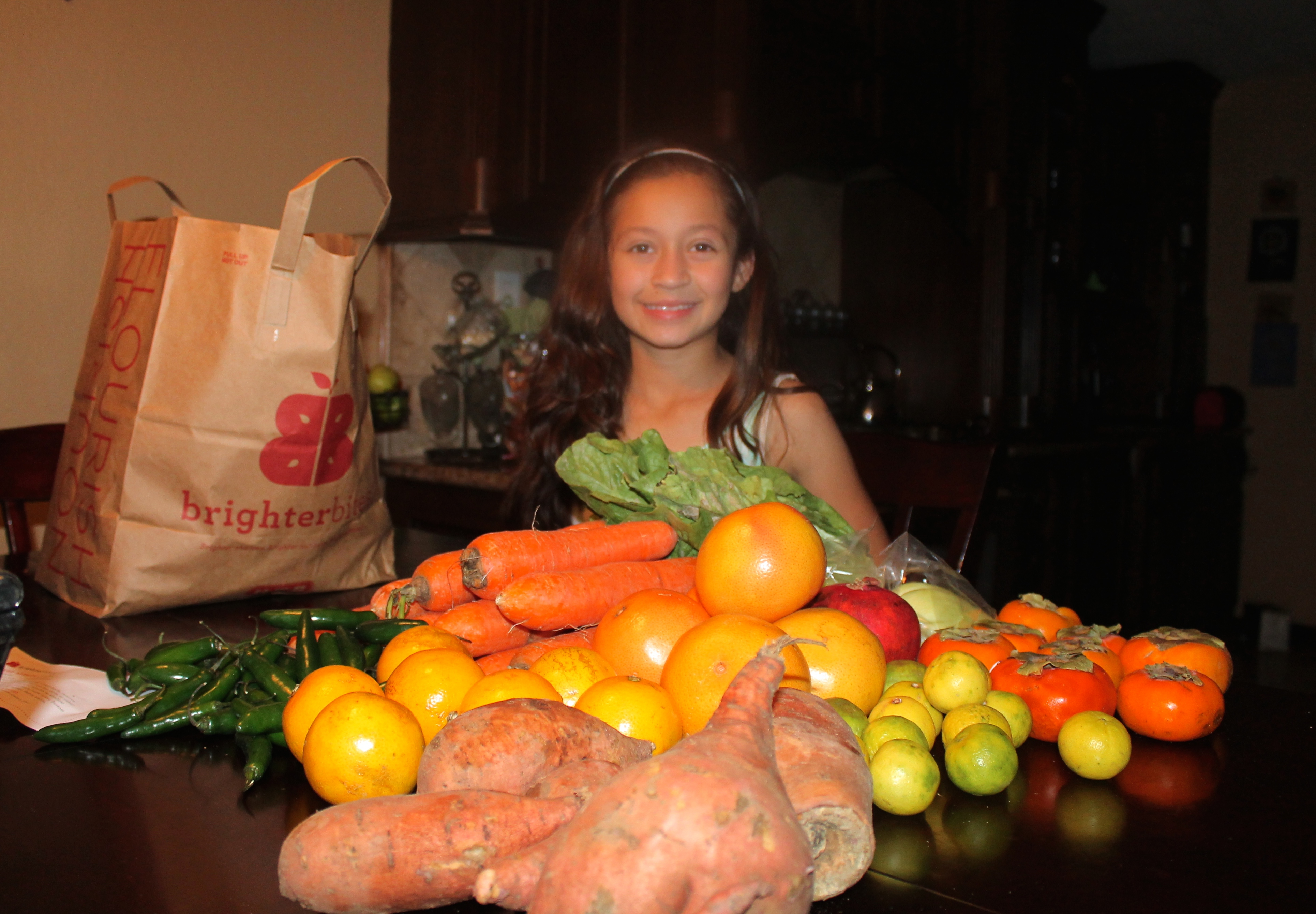
The photos, two of which are shown here, were included in an exhibit last year to demonstrate the impact of Brighter Bites from the perspective of participating families and to start a conversation about the change that Brighter Bites is making. The exhibit offered an invaluable glimpse of the family experience so that Brighter Bites may continue to improve, expand, and align with community values while bringing fresh fruit and vegetables to families across Texas.